Season 1 · Episode 5Aired March 29, 2026Part 1 of 2

Marshals Season 1, Episode 5:
"Lost Girls"

"My family's had this land for almost 150 years. The only thing I ever wanted was taken from me."— Kayce Dutton

Marshals Season 1 Episode 5 Lost Girls - Missing Indigenous girls investigation

Official Preview

Marshals Season 1 Official Trailer · CBS

Key Moments at a Glance

🐎

Monica's Mustang

Kayce attempts to sell Monica's wild horse after it nearly injures Tate — igniting a father-son confrontation about memory and letting go.

👧

Tate Spots Hailey

At a Wyoming gas station, Tate recognizes a missing Broken Rock classmate in the grip of a handler, triggering the episode's central investigation.

🚫

Going Rogue

Cal refuses jurisdiction. Kayce and Miles defy orders to pursue the trafficking lead alone — Dutton justice over institutional protocol.

💔

"Ava Is Already Dead"

Hailey reveals her missing friend Ava was murdered a year ago — and that removing Hailey will get the other captive girls killed.

🚗

The Empty Vehicle

A highway shootout ends with the team breaching the traffickers' vehicle to find it empty. "To Be Continued."

Episode Synopsis

"Lost Girls" is the episode where Marshals stops being a procedural and becomes something rawer. The crisis of Missing and Murdered Indigenous Women — a real-world epidemic that has defined and devastated Native communities across North America — is brought to the center of the story not as a backdrop or a thematic nod, but as the engine of the entire episode.

A personal errand to sell Monica's wild mustang accidentally puts Tate face-to-face with a classmate he thought was simply gone. What follows is an investigation that the system doesn't want and the team isn't authorized to conduct — pursued anyway, because some things matter more than jurisdiction.

Full Episode Recap

The Horse and the Memory

The episode opens at East Camp with an incident that could have been catastrophic: Monica's wild mustang, still half-feral and unbroken, charges Tate and nearly tramples him. Kayce makes the decision any parent would — the horse has to go. But for Tate, this isn't about a dangerous animal. The mustang is the last living connection to his mother. Selling it feels like selling her.

The confrontation between father and son is the most emotionally raw scene Brecken Merrill has been given in the series. "You're trying to erase her," Tate accuses. Kayce — who has spent five episodes suppressing his grief in the service of keeping his son safe — has no good answer. He loads the horse anyway. They drive to a livestock dealer in Wyoming, silence filling the cab.

A Face at the Gas Station

At a gas station outside Sheridan, Tate spots Hailey — a girl from his school on the Broken Rock Reservation. She's in the company of a man who is clearly a handler: watchful, controlling, positioned between her and any exit. Hailey's eyes meet Tate's with the unmistakable look of someone who wants to scream but can't.

Back at headquarters, the confirmation is immediate and chilling: Hailey was reported missing from the reservation four months ago. The case went nowhere. Jurisdictional gaps between tribal police, county law enforcement, and federal agencies created exactly the blind spot that traffickers exploit. It's a scenario that has played out thousands of times across Indian Country.

Going Off the Grid

Cal refuses to authorize pursuit. The team is stretched thin protecting Samuel LaChance, a federal homicide witness, and a reservation trafficking case falls outside their designated jurisdiction. His logic is sound. His priorities are correct. And Kayce doesn't care.

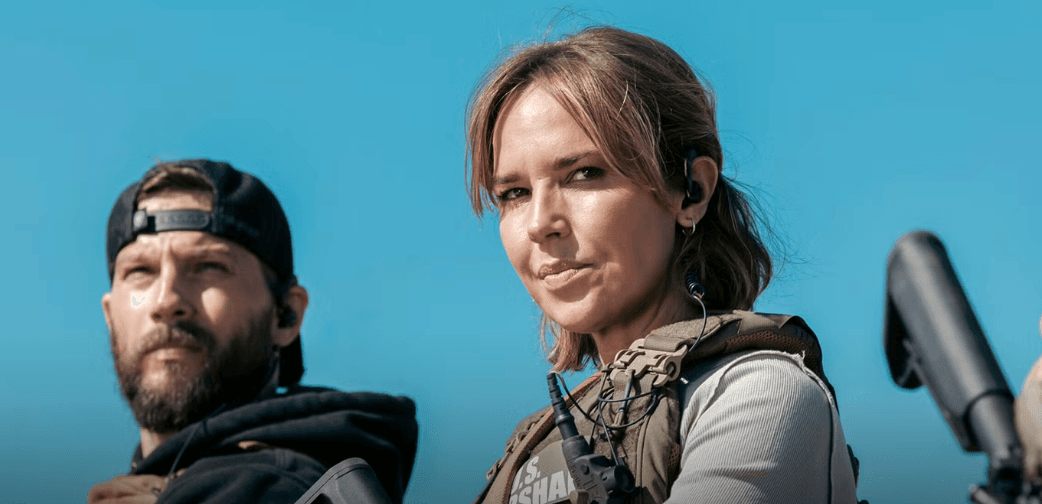
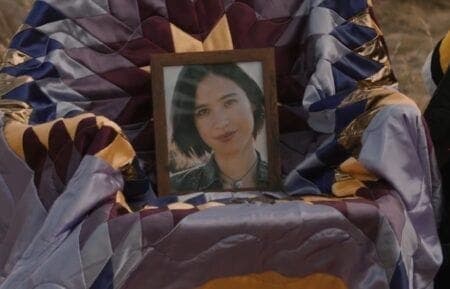
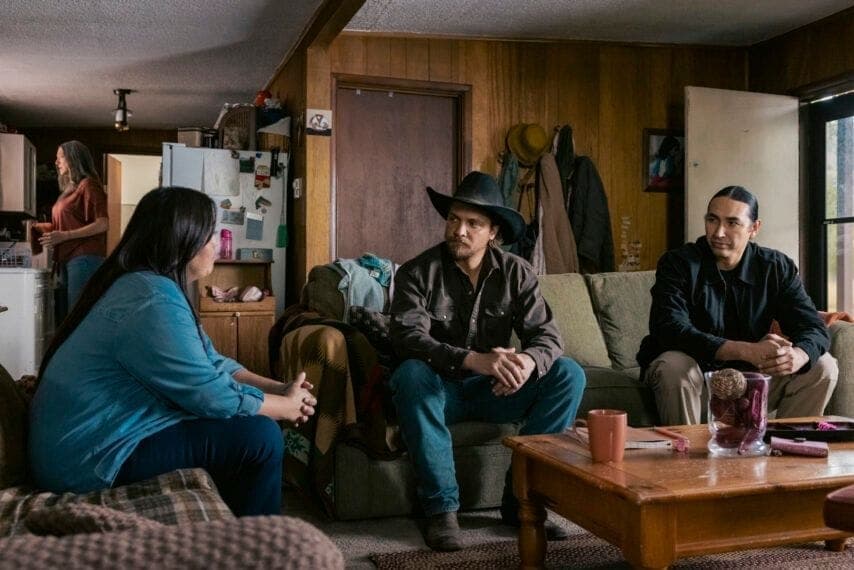
Kayce and Miles operate as a two-man unit, retracing Hailey's path to her mother on the reservation, then tracking the handler through gas station surveillance and burner phone records. Tatanka Means's Miles is essential here — his connections on the reservation open doors that Kayce's badge never could. Their investigation leads to a violent confrontation with the trafficker, who confirms the worst: Hailey is part of a larger ring. Her friend Ava, missing for over a year, is already dead.

Hailey delivers the episode's most devastating line: if she's removed from the operation, the other girls being held will be executed. She isn't asking to be rescued. She's asking them to save everyone — or save no one.

The Highway

The team reunites for the pursuit. The final act is a high-speed chase on a deserted Montana highway that ends in a shootout between the Marshals and the trafficking convoy. The traffickers are neutralized. The vehicle is breached. And it is empty.

The girls are not in the vehicle. They are not anywhere visible. The "To Be Continued" card hits the screen like a gut punch. It is the first two-parter in Marshals history, and the cliffhanger earns the format entirely.

Character Development

Kayce — The Father Who Can't Stop Losing

This episode crystallizes what makes Kayce Dutton different from every other cowboy-lawman on television: his driving force isn't justice, it's fatherhood. He goes rogue not because a girl is missing, but because she's Tate's classmate. The institutional barriers that Cal correctly cites as reasons to stand down are the same barriers that let Monica die without answers. Kayce can't let that happen again. Luke Grimes plays the calculus of a man who has already weighed the consequences — his badge, his career, his freedom — and decided they weigh less than a child.

Tate — Breaking Through

Brecken Merrill delivers the performance of the season. The confrontation over Monica's horse would be enough, but spotting Hailey transforms Tate from an angry teenager into the catalyst for the entire episode. His decision to tell his father — not to handle it alone, not to ignore it — represents a maturity that the previous generation of Duttons never managed. Tate trusts his father. He just wishes his father would trust himself.

Miles — The Bridge

Tatanka Means has been underused in the first four episodes. "Lost Girls" corrects that emphatically. Miles is the character who makes the investigation possible — his connections on the reservation, his understanding of the cultural dynamics at play, and his willingness to operate outside the system alongside Kayce create a partnership that the show has been building toward. He's not Kayce's sidekick. He's the reason Kayce can function in this world at all.

Yellowstone Universe Connections

  • The MMIW Crisis: Yellowstone addressed Indigenous sovereignty through Thomas Rainwater's political battles. Marshals takes the next step — addressing the human cost of the jurisdictional gaps between tribal and federal authority. The missing girls of Episode 5 are the direct consequence of the systemic failures that Rainwater spent five seasons fighting.
  • Dutton Justice vs. The System: Kayce disobeying Cal to pursue the trafficking case mirrors every time John Dutton acted outside the law because the law wasn't enough. The difference is context: John protected land. Kayce protects children. The impulse is inherited. The application is evolved.
  • Monica's Legacy: The mustang subplot keeps Monica's presence alive in the narrative without sentimentalizing it. Monica was an advocate for her people. The missing girls Kayce fights to save are the embodiment of what she fought for. Her death gives this episode its weight; her values give it its direction.

Frequently Asked Questions

What happens in Marshals Episode 5 "Lost Girls"?

In "Lost Girls," Tate spots a missing classmate named Hailey at a Wyoming gas station while Kayce is trying to sell Monica's wild mustang. Recognizing signs of trafficking, Kayce and Miles defy Cal's orders to investigate the disappearance, uncovering a human trafficking ring targeting Indigenous girls from the Broken Rock Reservation. The episode ends on a cliffhanger with the traffickers' vehicle found empty — the girls are still missing.

What is the MMIW connection in Marshals Episode 5?

Episode 5 directly addresses the crisis of Missing and Murdered Indigenous Women (MMIW), a real-world epidemic affecting Native communities across North America. The episode highlights how jurisdictional gaps between tribal, state, and federal law enforcement create blind spots that traffickers exploit — the exact gaps that the Marshals team is uniquely positioned to close.

Why does Kayce try to sell Monica's horse in Marshals Episode 5?

After Monica's wild mustang nearly tramples Tate, Kayce decides to sell the horse for Tate's safety. This decision triggers a painful confrontation with Tate, who accuses his father of trying to erase Monica's memory. The horse represents the ongoing tension between protecting Tate and honoring Monica's legacy — a tension that has defined Kayce's parenting throughout the season.

Does Marshals Episode 5 end on a cliffhanger?

Yes. Episode 5 is the first episode of Marshals to end with a "To Be Continued" card. After a high-speed chase and shootout on a deserted highway, the team breaches the traffickers' vehicle only to find it hauntingly empty. The missing girls — including Hailey — are nowhere to be found. The story continues directly in Episode 6, "Out of the Shadows."

Why does Kayce go rogue in Marshals Episode 5?

Cal refuses to intervene in what appears to be a reservation-based issue outside their official jurisdiction, as the team is occupied protecting a federal homicide witness. Kayce and Miles disobey orders because the missing girl is Tate's classmate, making the case personal. Their decision to act outside the system echoes the Dutton family's longstanding belief that justice sometimes requires breaking the rules.