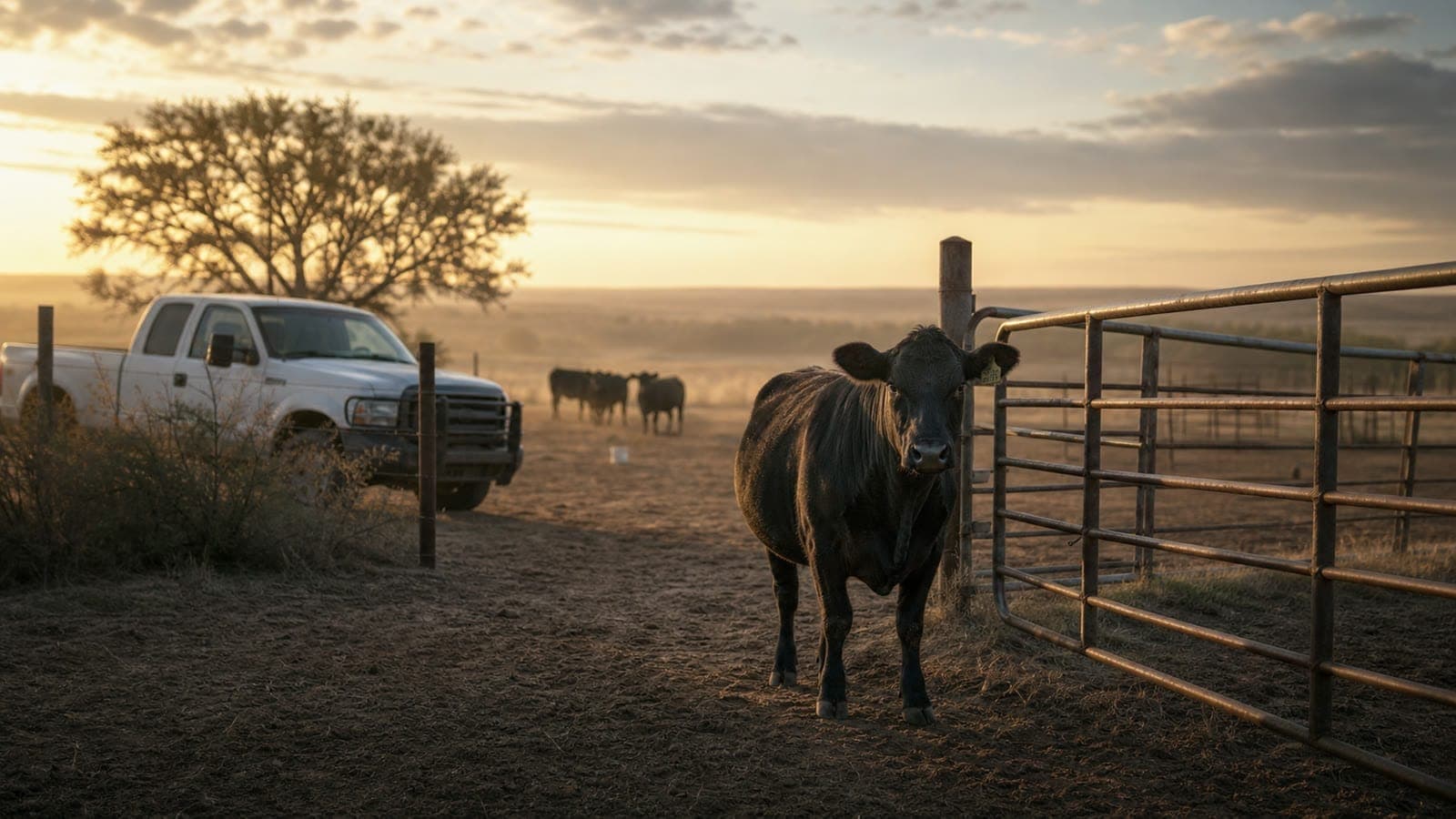
Yes. In Dutton Ranch Season 1, Episode 3, the disease affecting Beth and Rip's cattle is identified as foot-and-mouth disease, often shortened to FMD. Everett McKinney examines the sick animal and treats the situation as a serious outbreak risk, which is why Rip immediately moves into quarantine mode.
But the more interesting question is not just what the disease is. It is how it got onto the ranch in the first place.
Episode 3, "Act of God Business," turns one sick cow into the first major business crisis of Beth and Rip's Texas life. Their new ranch is barely standing on its own, Beth is trying to sell their beef in Dallas, and Rip is suddenly facing a disease that could shut down the herd before the Duttons earn real money from it.
Below is what the show confirms, what foot-and-mouth disease means in cattle, and what is still only theory after Episode 3.
What Happens to the Cow in Episode 3?
The cow disease story starts when Rip, Zachariah, and Azul find a sick animal away from the rest of the herd. The cow is in terrible shape: drooling, weak, and visibly unwell around the mouth and hooves.
Rip kills the animal, and Everett McKinney arrives to examine it. Everett identifies the illness as foot-and-mouth disease and immediately treats it as a herd-wide threat, not an isolated sick cow.
That matters because FMD is not just "one cow got sick." In the world of ranching, it is the kind of diagnosis that can change everything overnight.
Rip orders the herd quarantined. The ranch hands stay out with the cattle rather than moving freely back through the property. By the end of the episode, Beth returns home and finds Rip standing over another dead or dying animal, making it clear the problem has already spread beyond the first cow.
So, Is It Foot-and-Mouth Disease?
In the story, yes. Dutton Ranch Episode 3 points directly to foot-and-mouth disease.
Everett's diagnosis is the clearest evidence. The show also frames the symptoms in a way that matches why FMD scares ranchers: mouth problems, hoof trouble, drooling, weakness, and the danger of rapid spread.
In real life, the USDA describes foot-and-mouth disease as a severe viral disease that primarily affects cloven-hoofed animals such as cattle, pigs, sheep, goats, and deer. It spreads fast, is difficult to control, and can leave surviving animals weakened and less productive.
That is why the episode treats the outbreak as a financial and operational emergency. Beth and Rip are not just worried about losing one animal. They are worried about losing the herd, the beef deal, and maybe the entire Texas fresh start.
Is Foot-and-Mouth Disease the Same as Hand, Foot, and Mouth Disease?
No. This is an important distinction.
Foot-and-mouth disease in cattle is not the same thing as hand, foot, and mouth disease in people. The similar names confuse people, but they are different diseases.
USDA guidance says FMD is not considered a human health or food safety threat, and it is not related to the common childhood illness called hand, foot, and mouth disease.
For the episode, that means the stakes are mainly about the animals, the ranch business, and possible containment measures. It is not written as a human outbreak story.
Why Is FMD Such a Big Deal for Rip's Ranch?
Foot-and-mouth disease is dangerous for a ranch because it moves quickly and attacks the basic value of the herd.
The problem is not only whether every infected animal dies. Many animals can survive, but they may become weak and less productive. For a ranch trying to sell premium beef, that is disastrous.
It also creates a reputational problem. If word gets out that the Dutton herd may have FMD, buyers could walk away. Neighbors could panic. Local authorities could get involved. The new ranch could become known for disease before it becomes known for quality beef.
That is why Everett's decision to help Rip contain it quietly is such a big character moment. He is not minimizing the disease. He is trying to give the ranch a chance to act before the situation becomes public chaos.
Did the New Bull Bring the Disease?
That is the most practical explanation Episode 3 gives us.
Rip suspects the new bull Beth and Rip bought at auction in Episode 2 may not have been properly checked. Everett also points toward cattle movement and unprotected animals as part of the risk.
This fits the logic of the show. Beth and Rip are new to Texas. They are building fast. They do not yet know which local sellers, haulers, and ranchers they can trust. A bad animal entering the herd through an auction purchase is a clean way to turn their ambition into a crisis.
But the episode does not close the case. It gives us a likely route, not a final answer.
Is Beulah Behind the Cow Disease?
Not confirmed.
Beulah Jackson is clearly working against Beth and Rip, and Episode 3 gives viewers plenty of reasons to distrust 10 Petal Ranch. Beulah's influence over local power is obvious, Joaquin appears in Dallas while Beth is trying to make a beef deal, and the episode introduces another shadowy thread through Mariano Reyes.
Still, the show has not confirmed that Beulah, Joaquin, Mariano, or anyone from 10 Petal caused the outbreak.
Right now, the safest reading is:
| Possibility | Status After Episode 3 |
|---|---|
| The new bull brought the disease into the herd | Strongly suggested |
| Poor vaccination or cattle movement caused the outbreak | Suggested by Everett |
| Beulah or 10 Petal deliberately infected the herd | Fan theory, not confirmed |
| Mariano Reyes is connected to the cattle problem | Suspicious timing, not confirmed |
That distinction matters. Dutton Ranch is clearly inviting suspicion, but suspicion is not proof.
Why the Disease Hits at the Worst Possible Time
The outbreak is devastating because it lands exactly when Beth is trying to turn the ranch into a business.
While Rip is dealing with sick cattle, Beth is in Dallas trying to sell Dutton beef. She pitches the quality of their Black Angus cattle and tries to force open a supply relationship. For a moment, it looks like she may have found the ranch's first real commercial path forward.
Then the disease story catches up with her.
That contrast is the point of the episode. Beth is selling the future while Rip is trying to keep that future from dying in the field.
The title "Act of God Business" also plays with that tension. A cattle disease can look like random misfortune, the kind of disaster ranchers have always feared. But in the Yellowstone universe, an "act of God" often arrives with human fingerprints somewhere nearby.
Is This Like the Brucellosis Story in Yellowstone?
It is similar in function, even if the disease is different.
Yellowstone used cattle disease, market pressure, and regulatory risk to show how fragile ranch economics can be. Dutton Ranch uses foot-and-mouth disease in the same spirit: one biological threat can turn land, cattle, money, reputation, and politics into a single crisis.
For Rip, that is the real fear. He can fight men. He can handle violence. He can intimidate enemies.
But disease is different. It does not care how tough he is. It spreads before he can punch it, shoot it, or threaten it.
That makes the outbreak a smart Episode 3 problem. It forces Rip into responsibility rather than reaction.
What Does This Mean for Beth and Rip?
The cow disease threatens three things at once.
First, it threatens the herd. Without healthy cattle, the ranch has no product.
Second, it threatens Beth's business plan. A restaurant deal or premium beef buyer means nothing if the herd is under suspicion.
Third, it threatens Beth and Rip's independence. They came to Texas to build something that belonged to them. If the outbreak spreads, they may have to rely on Everett, local officials, neighboring ranchers, or even people they do not trust.
That last point is the most dramatic. Beth and Rip have always survived by controlling the room. Foot-and-mouth disease takes control away from them.
What Should Viewers Watch in Episode 4?
The biggest questions going into Episode 4 are:
- Does the quarantine hold?
- Does Everett keep the outbreak quiet, or does someone expose it?
- Was the new bull really the source?
- Does Beth's Dallas beef deal collapse before it begins?
- Does Beulah use the disease as leverage?
- Is Mariano's cattle-related conversation part of the same thread?
If Episode 3 is the diagnosis, Episode 4 should be the test of whether Rip can manage a ranch crisis without falling back on old Yellowstone violence.
Quick FAQ
What disease do the cows have in Dutton Ranch Episode 3?
The show identifies the disease as foot-and-mouth disease, also known as FMD.
Is foot-and-mouth disease real?
Yes. FMD is a real viral disease affecting cloven-hoofed animals, including cattle. It is known for spreading quickly and creating major economic damage for livestock operations.
Is it mad cow disease?
No. The episode points to foot-and-mouth disease, not mad cow disease. Mad cow disease is a different condition with a different cause and a different kind of risk.
Can people get sick from the Dutton Ranch cow disease?
The episode is focused on cattle and ranching risk. In real life, USDA says FMD is not a human health or food safety threat and is not the same as hand, foot, and mouth disease in children.
Did Beulah cause the outbreak?
Not confirmed. Beulah and 10 Petal Ranch are suspicious in the broader story, but Episode 3 does not prove they infected the herd.
Why does Rip quarantine the herd?
Because FMD can spread quickly. Quarantine gives Rip and Everett a chance to slow the outbreak and keep the disease from moving through the whole ranch.
What to Read Next
- Dutton Ranch Episode 3 Recap: "Act of God Business"
- Dutton Ranch Episode Guide
- Who Is Beulah Jackson in Dutton Ranch?
- Where to Watch Dutton Ranch